Keeping the outside of a property clean can make a huge difference to how it looks, how long surfaces last, and how safe it feels to live or work there. In Athlone and the surrounding areas, exterior surfaces deal with plenty of moisture, algae growth, traffic dirt, and general weather staining throughout the year. While pressure washing is one of the quickest ways to refresh driveways, patios, walls, and other outdoor areas, safety is often overlooked.
This guide focuses on one of the most important pressure washing basics: safe pressure washing for homeowners and businesses in Athlone, Ireland. Whether you are thinking about cleaning your own driveway or hiring a professional for a larger exterior cleaning job, understanding the risks, the right methods, and the safest approach can help you avoid damage, injury, and unnecessary costs.
Why Safety Matters in Pressure Washing
Pressure washing might seem straightforward at first glance. You connect the machine, point the lance, and wash away dirt. In reality, the force produced by a pressure washer can damage surfaces, strip paint, break seals, and even cause serious injury if used incorrectly.
For properties in Athlone, this matters even more because many homes and commercial premises have a mix of materials outdoors. You may find concrete driveways, block paving, painted walls, rendered finishes, timber fencing, stone paths, and tarmac all on the same property. Each one reacts differently to water pressure and cleaning solutions.
A safe approach is not only about protecting the operator. It is also about protecting the property, nearby plants, pets, parked cars, neighbours, and anyone walking through the area.
Common Pressure Washing Risks Around Athlone Properties
Slippery Surfaces Before and After Cleaning
One of the biggest problems in the Midlands is algae, moss, and grime building up on outdoor surfaces. These surfaces are already slippery before cleaning starts, especially in shaded areas. During washing, water and loosened debris can make paths and patios even more hazardous.
For example, a homeowner in Monksland might decide to wash a rear patio after noticing green staining near the back door. Without proper footwear and drainage planning, the area can become dangerously slick within minutes.
Surface Damage From Too Much Pressure
Not every surface can handle the same level of force. Old concrete can be etched, paving joints can be disturbed, and soft sandstone can be scarred if the machine is too powerful or the nozzle is too narrow.
Rendered walls are another good example. Many homes in and around Athlone have painted or decorative render finishes that can be marked or stripped if cleaned aggressively. In many cases, soft washing or lower-pressure cleaning is the safer choice.
Injuries Caused by Incorrect Handling
The spray from a pressure washer is strong enough to cut skin. Even a brief mistake can lead to painful injuries. Users can also strain their backs, lose balance on wet surfaces, or trip over hoses and cables.
This is especially relevant when cleaning sloped driveways, steps, or raised decking. A moment of poor footing can turn a simple cleaning task into a trip to A&E.
Electrical Hazards
Exterior sockets, lighting, extension leads, and electric gates all need careful attention. Water and electricity are an obvious bad combination, but it is easy to forget just how many electrical features are present around modern homes and business premises.
Shops, apartment blocks, and offices around Athlone often have signage, outdoor lighting, and powered shutters that must be protected before any pressure washing begins.
How to Prepare Safely Before Pressure Washing
Inspect the Area First
Before any machine is switched on, walk through the area and assess what needs attention. Look for cracks, loose pointing, damaged paving, trailing wires, fragile decorations, and drainage points. A few minutes of inspection can prevent a lot of trouble later.
It is also worth checking where the runoff water will go. You do not want dirty water flowing into a doorway, garage, or neighbouring property.
Choose the Right Equipment
Pressure washing safety starts with using the correct machine and accessories for the job. A more powerful machine is not always better. The right nozzle, pressure setting, and surface attachment can make cleaning more controlled and more effective.
For many domestic jobs, a fan nozzle is safer than a pinpoint jet because it spreads the force more evenly. Flat surface cleaners can also reduce streaking and help maintain a safer working distance on patios and driveways.
Wear Proper Protective Gear
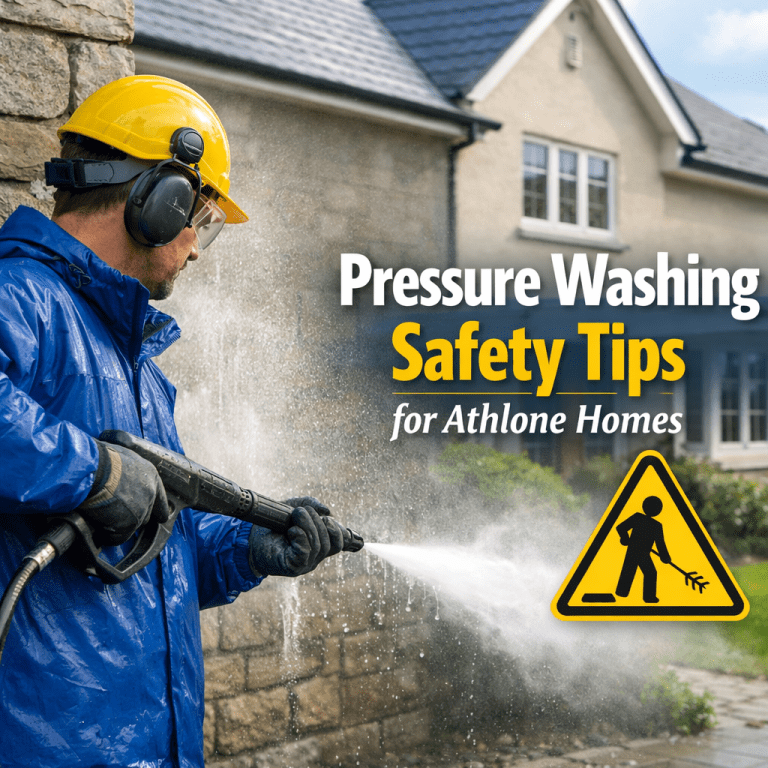
If you are carrying out any exterior cleaning work yourself, the basics matter. Wear non-slip footwear, gloves, eye protection, and clothing that covers your skin. If detergents are being used, check the product instructions and use any additional protection recommended by the manufacturer.
Good footwear is particularly important in Ireland’s damp conditions. Many outdoor surfaces in Athlone stay wet longer due to shade, tree cover, or poor drainage, making slips more likely.
Safe Cleaning Methods for Different Exterior Surfaces
Driveways and Concrete Areas
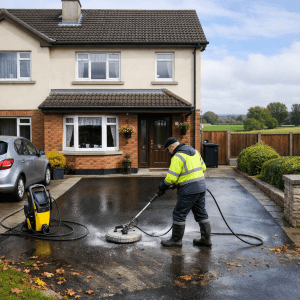
Concrete driveways are generally durable, but they can still be marked by incorrect pressure or poor technique. Keep the nozzle moving and avoid holding it too close to the surface. Work in a consistent pattern so the finish looks even.
If oil staining is present, pressure washing alone may not solve the problem. A pre-treatment can help lift stubborn marks more safely than simply increasing the pressure.
Block Paving
Block paving is popular with homeowners throughout Athlone because it looks tidy and suits both modern and traditional properties. However, the joints between blocks can be disturbed by aggressive washing. This can loosen the paving over time.
A safer approach is to use moderate pressure and plan for re-sanding the joints afterwards if needed. This helps preserve the stability of the surface once it has dried.
Patios and Natural Stone
Natural stone needs a more cautious touch. Some types of stone are porous and can be damaged if cleaned too forcefully. Test a small hidden area first before cleaning the entire patio.
Imagine a homeowner in Glasson preparing their garden for summer guests. Their stone patio may only need a low-pressure wash and a suitable treatment for organic growth rather than a full high-pressure blast.
Walls, Render, and Exterior Finishes
Walls are often one of the most misunderstood areas in exterior cleaning. Dirt, algae, and red or black staining can build up slowly, but blasting a wall with high pressure can force water into cracks or remove paint.
In many situations, soft washing is a safer and more effective option for rendered or painted surfaces. This uses low pressure alongside specialist cleaning solutions to treat staining without the same level of physical force.
Why Professional Pressure Washing Is Often the Safer Option
Many people start by thinking pressure washing is a quick weekend task, only to realise it is harder than expected. Hiring a professional exterior cleaning company in Athlone can reduce the risk of damage and produce better results.
Experienced operators know how to assess a surface, select the right cleaning method, and avoid common mistakes. They also understand when pressure washing is appropriate and when another method would be safer.
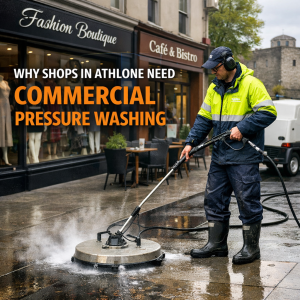
For businesses, the benefits are even clearer. A retail unit with foot traffic cannot afford slippery entrances, overspray on windows, or disruption during busy hours. A professional service can plan the work properly, use commercial equipment safely, and minimise risk to staff and customers.
Practical Safety Tips for Homeowners in Athlone
Never Start Too Close
Always begin with the nozzle further away from the surface than you think you need. You can move closer gradually if required. This simple habit helps prevent sudden surface damage.
Avoid Washing in Busy Conditions
If children are playing nearby, pets are in the garden, or cars are parked close to the work area, wait until the space is clear. Pressure washing should never be done where someone can accidentally walk into the spray path.
Be Careful With Ladders
Using a pressure washer while standing on a ladder is risky. The recoil from the lance can throw off your balance quickly. If higher areas need cleaning, it is usually safer to use extension tools or call a professional.
Use Chemicals Responsibly
Exterior cleaning products can be useful for treating algae, lichen, and staining, but they need to be chosen carefully and applied correctly. Always follow label instructions and take care around lawns, flowerbeds, and drains.
A homeowner near Coosan, for instance, may want to clean a patio bordered by ornamental plants. In that situation, pre-wetting nearby greenery and using the right product dilution can help reduce the risk of damage.
Seasonal Safety Advice for Pressure Washing in Ireland
Spring Cleaning With Caution
Spring is one of the busiest times for exterior cleaning in Athlone. People want to brighten up their homes after winter, but surfaces may still be fragile from frost, moisture, and long periods of algae growth. A careful inspection is essential before starting.
Summer Maintenance and Drying Time
Summer usually offers better drying conditions, which can make cleaning safer and more effective. However, warm days can lead people to rush larger jobs. It is still important to control runoff, secure the area, and avoid overexertion.
Autumn Leaf Build-Up
Autumn often brings slippery driveways and paths due to leaves, debris, and damp weather. Cleaning these areas can improve safety, but it is wise to schedule the work before conditions become too wet and hazardous.
Winter Limitations
Pressure washing in freezing or near-freezing conditions is rarely a good idea. Water can turn to ice quickly, creating a serious slip risk. In winter, timing and weather checks are especially important.
Frequently Asked Questions
1. Is pressure washing safe for every surface?
No. Some surfaces, such as delicate stone, render, painted walls, and older paving, may need lower pressure or soft washing instead. The correct method depends on the material and its condition.
2. Can I pressure wash my driveway myself?
Yes, but you should understand the right pressure settings, nozzle type, and safe working technique before starting. If the surface is fragile, heavily stained, or uneven, professional help may be the better option.
3. What is the safest time of year for pressure washing in Athlone?
Spring and summer are often the most practical times because temperatures are milder and surfaces dry more easily. That said, weather conditions on the day matter more than the month alone.
4. How do I know if a surface needs soft washing instead?
If the area is painted, rendered, aged, or prone to damage, soft washing may be safer. A professional exterior cleaning company can assess the surface and recommend the most suitable method.
5. Should I move outdoor furniture and cars before cleaning?
Absolutely. Move furniture, bins, plant pots, and vehicles away from the area to avoid splashing, staining, or accidental damage. This also gives you a safer and clearer workspace.
Short Summary
Pressure washing is an effective way to maintain outdoor surfaces, but safety should always come first. In Athlone, where damp weather and algae growth are common, the risks of slips, surface damage, and poor technique are real. By inspecting the area, using the right equipment, choosing the correct cleaning method, and knowing when to call a professional, homeowners and businesses can keep their properties cleaner and safer without unnecessary problems.
Conclusion
Understanding pressure washing safety is one of the most valuable pressure washing basics for any property owner in Athlone. A clean driveway, patio, or exterior wall can transform the appearance of a home or business, but the job should always be done with care. The right preparation, the correct equipment, and a method suited to the surface make all the difference.
If you are planning exterior cleaning in Athlone or nearby areas, think beyond just getting the dirt off. Focus on protecting the surface, avoiding hazards, and choosing the safest route to long-lasting results. In many cases, that thoughtful approach is what delivers the best finish of all.