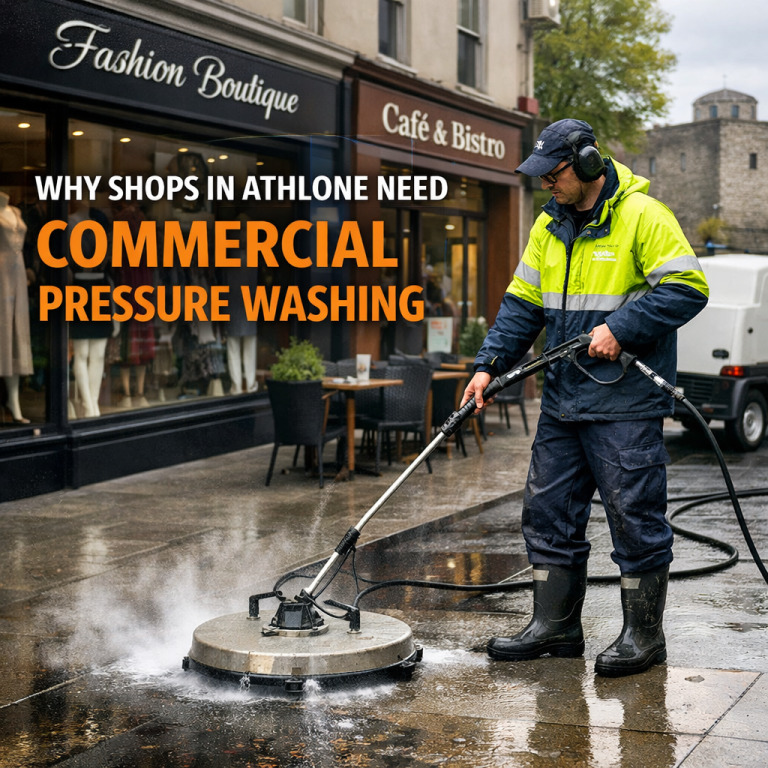
For shops, cafés, offices, and other business premises in Athlone, first impressions start before a customer even opens the door. The condition of the footpath, entrance, forecourt, signage area, and exterior walls says a lot about how a business is run. In busy commercial areas, outdoor surfaces quickly collect dirt, algae, chewing gum, oil marks, traffic film, and general grime. Over time, that build-up does more than affect appearance. It can create slip hazards, damage surfaces, and make an otherwise professional business look neglected.
This is where commercial pressure washing in Athlone becomes especially valuable. Rather than treating exterior cleaning as an occasional cosmetic job, many business owners are now viewing it as part of regular property maintenance and brand presentation. In this article, we will look at why retail and customer-facing businesses in and around Athlone benefit from commercial pressure washing, what areas should be cleaned, practical scheduling advice, and how proper exterior maintenance can protect both reputation and safety.
The Hidden Cost of a Dirty Business Exterior
Many business owners focus heavily on interiors, customer service, and stock presentation, which makes perfect sense. However, the outside of a commercial property often shapes a customer’s opinion before they enter. A stained entrance or slippery path can quietly undermine the image a business is trying to build.
In Athlone, where weather conditions often include regular rainfall, dampness, and seasonal debris, external surfaces can become dirty much faster than expected. Moss and algae thrive on shaded paths, side entrances, and paved forecourts. Vehicle traffic leaves behind dark marks and residue. Bins and service areas can become stained and unpleasant. All of this contributes to a tired appearance that may put off potential customers.
For a small independent retailer on a busy street, this can be a real issue. Imagine a boutique with well-designed window displays and quality products, but with blackened paving slabs and gum marks outside the entrance. Even if the shop itself is excellent, the exterior can create doubt in a customer’s mind. Cleanliness outside supports trust inside.
Why Commercial Pressure Washing Matters for Customer-Facing Premises
Commercial premises are different from private homes because they often have higher footfall, stricter safety concerns, and stronger visual expectations. A homeowner may tolerate some staining on a driveway for a season, but a business open to the public usually cannot afford to let exterior cleaning slide for too long.
It Improves First Impressions
A clean frontage makes a property look active, professional, and cared for. This matters whether you run a salon, restaurant, medical practice, convenience store, hotel entrance, or office building. Customers are more likely to feel confident in a business that clearly maintains its premises.
It Supports Health and Safety
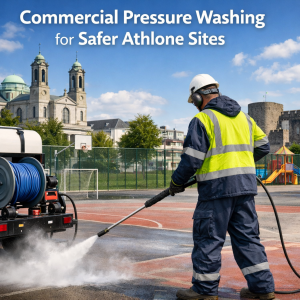
Slippery surfaces are a genuine concern in commercial settings. Algae, moss, wet leaves, grease, and grime can all increase the risk of slips and falls. Pressure washing helps remove these contaminants from walkways, ramps, entrances, loading areas, and shared public-facing spaces.
It Helps Protect Exterior Materials
Contaminants left sitting on concrete, paving, brick, render, and other surfaces can gradually contribute to wear and staining. While pressure washing is often associated with appearance, it also forms part of preventative maintenance. Removing harmful build-up early may help extend the life of surfaces and reduce the need for premature repairs.
Areas Businesses in Athlone Should Prioritise
Not every part of a commercial property needs the same cleaning frequency. Some zones have much greater impact on customers and staff and should be prioritised accordingly.
Shopfront Entrances and Paths
The immediate area outside the front door is often the most important. It is the first point of contact for customers and one of the most visible spaces. Dirt, stains, food spills, gum, and algae all collect here quickly, especially in wetter months.
Forecourts and Parking Areas
Oil marks, tyre residue, and general traffic film can build up in parking spaces and forecourt areas. These can make a property look heavily worn, even when the business itself is well managed. Regular cleaning here can make a significant visual difference.
Bin Stores and Service Yards
These areas are easy to ignore because they are less visible to the public, but they still matter. They can become unhygienic, stained, and odorous over time. For hospitality businesses especially, keeping these zones clean is part of presenting a well-run operation.
Outdoor Seating and Hospitality Spaces
For cafés, pubs, and restaurants around Athlone, outdoor seating can be a major asset during milder months. Pressure washing patios, paved areas, walls, and surrounding surfaces helps create a more inviting environment for guests.
Seasonal Advice for Commercial Properties
One of the most practical ways to approach commercial pressure washing is to plan it around the seasons. Athlone’s climate means exterior conditions change throughout the year, and each period brings different cleaning challenges.
Spring Cleaning for Business Premises
Spring is an ideal time to deal with grime left behind by winter. Paths may have become slippery, walls may look dull, and entrances often need a refresh. Many businesses choose a deep clean in spring to prepare for increased footfall and improve curb appeal.
Summer Maintenance for Outdoor Areas
Summer is often best for maintaining outdoor seating spaces, beer gardens, terraces, and event areas. Dry weather can make cleaning and drying more straightforward, and businesses with outdoor customer spaces can benefit greatly from a fresh, clean presentation.
Autumn Safety Checks
Leaves, dampness, and debris can create hazardous surfaces in autumn. This is a smart time to clean paths, rear access points, and car parks before winter conditions make them worse.
Winter Risk Reduction
Although winter cleaning depends on conditions, targeted pressure washing can still be useful for removing dangerous build-up in key pedestrian zones. For many businesses, a pre-winter clean is one of the best ways to reduce slip risks later in the season.
Practical Example: A Local Business Scenario
Consider a family-run café just outside Athlone town with a small forecourt and several outdoor tables. Over months of wet weather, the paving stones around the entrance develop green algae, and the rear service area becomes stained from bins and deliveries. Customers begin tracking dirt inside, and the front seating area starts to look less inviting.
By arranging commercial pressure washing, the owners can restore the entrance, clean the seating area, and improve the rear yard. The difference is not just visual. Staff feel more confident welcoming customers into a cleaner-looking space, outdoor tables become more appealing to use, and the risk of someone slipping near the front entrance is reduced.
In another example, imagine a small retail unit in a mixed-use development where neighbouring businesses compete for passing foot traffic. One business regularly keeps its windows and exterior paving clean, while another lets grime build up around the doorway. Over time, the cleaner premises naturally feel more established and trustworthy, even if both businesses offer similar products.
Choosing the Right Cleaning Approach
Commercial pressure washing is not simply about blasting every surface with maximum force. Different materials and conditions require different methods. Professional cleaning providers will usually assess the surface type, level of contamination, and drainage considerations before starting work.
Surface-Specific Cleaning Matters
Concrete, natural stone, brick, render, painted surfaces, and tarmac all respond differently to pressure and cleaning solutions. Using the wrong method can damage joints, remove coatings, or leave uneven results. A proper commercial clean should be tailored to the site.
Timing Can Reduce Disruption
For customer-facing businesses, scheduling matters. Early morning, late evening, or quieter trading periods may be the best time for exterior cleaning. This helps reduce disruption to staff, customers, deliveries, and day-to-day operations.
Routine Plans Often Work Better Than One-Off Cleans
Some businesses only think about pressure washing when surfaces become visibly bad. In reality, regular maintenance is often more cost-effective than waiting until staining and build-up are severe. A simple cleaning schedule can keep a property looking better year-round and may prevent more stubborn problems from setting in.
Expert Tips for Business Owners in Athlone
If you are responsible for a commercial premises, there are a few practical ways to get better results from exterior cleaning.
Inspect High-Traffic Areas Monthly
Walk your entrance, paths, side access points, and customer-facing exterior areas regularly. Look for slippery patches, dark staining, moss, or gum build-up. Problems are easier to manage when caught early.
Pay Attention to Shaded Zones
Areas that get little sunlight often develop algae much faster, especially in Ireland’s damp climate. These spots may need more frequent cleaning than open areas.
Do Not Ignore Rear Access and Staff Areas
Even if customers rarely see them, rear yards and staff entrances still affect safety and hygiene. Keeping them clean supports a better working environment and reduces hazards for employees and deliveries.
Combine Pressure Washing With General Exterior Upkeep
Pressure washing works best as part of a broader maintenance plan that includes gutter checks, signage cleaning, litter removal, and occasional exterior repairs. Together, these improvements strengthen the overall presentation of the property.
Frequently Asked Questions
1. How often should a commercial property in Athlone be pressure washed?
It depends on the type of business, foot traffic, and exposure to dirt or moisture. Many customer-facing businesses benefit from scheduled cleaning several times a year, while high-traffic sites may need more frequent attention.
2. Is pressure washing suitable for all exterior commercial surfaces?
Not every surface should be treated the same way. Professional operators adjust pressure, technique, and cleaning products depending on whether the area is concrete, stone, brick, render, or another material.
3. Can pressure washing help reduce slip hazards?
Yes. Removing algae, moss, grease, and grime from walkways and entrances can significantly improve traction and make surfaces safer for customers and staff.
4. Will commercial pressure washing disrupt business operations?
It can usually be planned to minimise disruption. Many businesses schedule cleaning outside peak hours, such as early mornings or quieter periods during the week.
5. Is commercial pressure washing just about appearance?
No. While appearance is a major benefit, pressure washing also supports maintenance, hygiene, and safety. It can help preserve surfaces and reduce long-term wear caused by build-up and contamination.
Short Summary
For businesses in Athlone, commercial pressure washing is more than a cosmetic service. It helps create a better first impression, improves safety, protects exterior surfaces, and supports a more professional image overall. From shopfronts and forecourts to hospitality patios and service yards, clean outdoor areas show customers that a business pays attention to detail. With regular maintenance and the right cleaning approach, commercial properties can stay cleaner, safer, and more inviting throughout the year.
Conclusion
If you own or manage a commercial property in Athlone, exterior cleaning should be part of your ongoing maintenance strategy rather than an afterthought. In a competitive local environment, details matter. Clean entrances, safe walkways, and well-maintained outside spaces all contribute to how your business is perceived.
Whether you run a retail unit, restaurant, office, clinic, or hospitality venue, investing in commercial pressure washing in Athlone can help you protect your premises and present your business at its best. A cleaner exterior does not just improve looks. It helps create a safer, more welcoming space for everyone who visits.