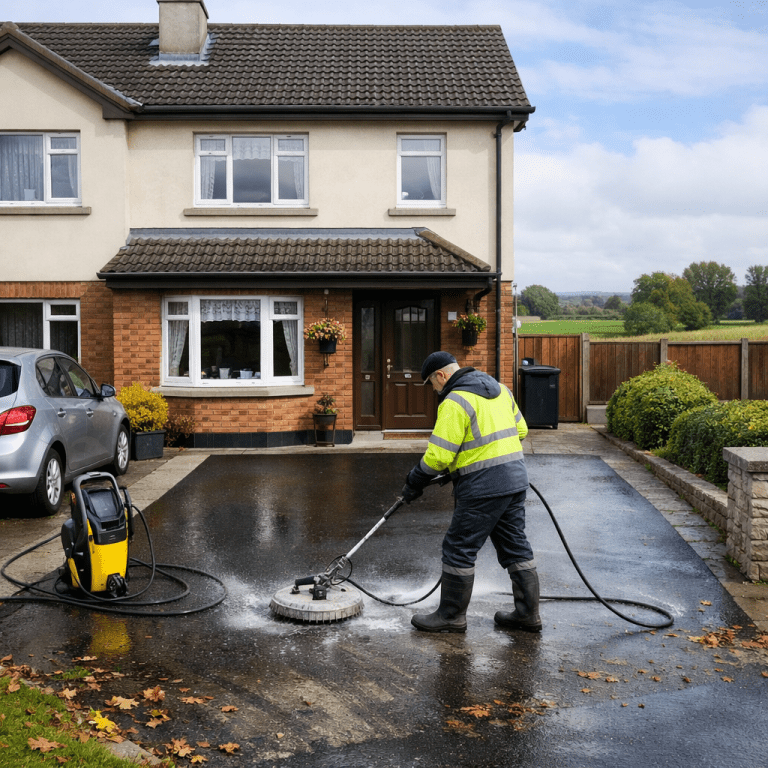
Driveways take more abuse than most exterior surfaces. In Athlone and the surrounding areas, frequent rain, damp mornings, fallen leaves, farm traffic, and everyday vehicle use can quickly leave concrete, tarmac, paving, and resin-bound surfaces looking stained and neglected. For homeowners, landlords, retail units, and commercial sites, driveway appearance matters because it shapes first impressions and can also affect safety.
This guide focuses on a surface-specific cleaning topic: how to clean different driveway surfaces safely and effectively in Athlone. Rather than treating every driveway the same, it is important to understand how each material responds to moss, algae, oil spots, tyre marks, and weathering. The wrong method can leave lines, pitting, loose jointing sand, or permanent damage. The right approach restores appearance while protecting the surface for the long term.
Why Driveway Cleaning Needs a Surface-Specific Approach
One of the most common mistakes in exterior cleaning is assuming that pressure alone will solve every problem. In reality, the best cleaning result comes from matching the cleaning method to the driveway material, the type of staining, the age of the surface, and local conditions. In Athlone, moisture-heavy weather can encourage green growth, while rural and semi-rural properties may also deal with mud, slurry residue, and heavy debris.
A surface-specific cleaning plan helps to:
Prevent unnecessary wear on older driveways
Reduce the risk of etching or discolouration
Improve slip resistance by removing algae and grime
Preserve jointing, sealants, and edges
Deliver a more even and professional finish
For businesses, this approach is especially important where customer access and appearance are both priorities. A hotel entrance, shop forecourt, office parking area, or rental property driveway all benefit from cleaning that is tailored rather than rushed.
Understanding the Main Driveway Surfaces Around Athlone
Concrete Driveways
Concrete is common across homes and commercial properties because it is durable and relatively low maintenance. However, it is also porous, which means oil, rust, leaf staining, and organic growth can settle in over time. High pressure used too closely can create visible striping or surface etching.
For concrete, a controlled cleaning method usually works best. Pre-treatment for organic growth or grease is often more effective than relying on force alone. In many cases, a steady, even surface-cleaning process followed by proper rinsing gives a far cleaner finish than spot blasting with a lance.
Tarmac and Asphalt
Tarmac is softer than concrete and needs extra care. Excessive pressure can scar the surface, loosen aggregate, or leave it looking patchy. In cooler or damp conditions, older tarmac can be even more vulnerable.
For Athlone property owners, this is particularly relevant on long residential driveways and private roads where weather exposure is constant. A gentler wash combined with the right treatment for moss and algae is usually safer than aggressive cleaning. Tarmac often responds well to careful maintenance cleaning rather than one heavy restoration session.
Block Paving
Block paving is popular because it looks attractive and suits many property styles. The challenge is that weeds, moss, lichen, and dirt collect in the joints. If cleaned incorrectly, the paving may be left unstable because the jointing sand gets washed out.
A proper block paving clean often includes weed treatment, controlled washing, re-sanding once dry, and sometimes sealing. This full process matters because simply washing the surface without restoring the joints can shorten the lifespan of the driveway.
Natural Stone and Decorative Paving
Sandstone, limestone, granite, and decorative paving need a more careful approach again. Some stone surfaces are sensitive to harsh chemicals or pressure levels. Colour variation and texture can also make uneven cleaning more obvious.
At period homes or higher-end properties around Athlone, decorative paving can be one of the first things visitors notice. Cleaning should enhance the natural finish rather than strip it back too aggressively.
Resin-Bound Surfaces
Resin-bound driveways are increasingly chosen for their tidy appearance and permeability. They generally require less aggressive cleaning than older hard surfaces. The key is removing dirt, algae, and debris without damaging the bonded finish.
These surfaces usually benefit from regular light maintenance. If neglected for too long, organic growth can settle in and spoil the clean look that makes resin-bound driveways appealing in the first place.
Common Driveway Problems in Athlone’s Climate
The local climate plays a big part in how quickly driveways become dirty. Athlone sees plenty of damp conditions through the year, and this creates the perfect environment for moss, algae, and black spot-like staining on some surfaces.
Typical issues include:
Green algae on shaded sections
Moss growth near walls, edges, and drains
Tyre marks near turning areas
Oil drips from parked vehicles
Leaf staining under trees
Rust marks from metal furniture or gates
Dirt tracked from roads, gardens, or fields
For example, a family home near a tree-lined road outside Athlone might find one half of the driveway darkened by leaf tannins and green growth, while the sunnier section stays relatively clean. A retail unit with regular car traffic may instead struggle with chewing gum, tyre residue, and general grime near entry points. These examples show why treatment should be based on actual surface conditions rather than a one-size-fits-all approach.
Safe Cleaning Methods for Different Stains
Organic Growth: Moss, Algae, and Lichen
These are among the biggest slip hazards on driveways, especially during wet weather. While they can be removed mechanically, pre-treatment is often the smarter option. It helps break down growth at the root and reduces the need for excessive pressure.
On shaded driveways in Athlone villages and rural outskirts, repeat treatment may sometimes be needed where overhanging trees keep the surface damp for long periods.
Oil and Grease Marks
Oil stains are a different challenge because they soak into porous surfaces. A degreasing treatment is typically needed before washing. Fresh stains are much easier to deal with than older ones, so early action matters.
If a landlord is preparing a rental property for new tenants, for instance, treating vehicle drip marks before they set deeply into the surface can make the entire frontage look more cared for.
Rust and Metal Staining
Rust stains can come from gates, plant pots, tools, or metal fixtures left on damp paving. These usually need specialist treatment. Harsh scrubbing or unsuitable products can worsen the appearance, especially on pale paving or natural stone.
Weeds in Joints
Weeds are especially common in block paving. Pulling the visible growth is only part of the job. To reduce fast regrowth, treatment should address the root and then restore the jointing properly after cleaning.
When to Clean a Driveway in Athlone
Timing can make a noticeable difference. Although driveway cleaning can be carried out during much of the year, certain seasons are more practical depending on the objective.
Spring
Spring is ideal for removing winter grime, algae, and moss. It is a good time for homeowners who want to refresh the property before summer use or before putting a house on the market.
Summer
Warmer conditions can help surfaces dry faster, which is useful for re-sanding block paving or applying sealant where appropriate. This can be a good window for larger restoration jobs.
Autumn
Autumn cleaning can be smart for properties with heavy leaf fall. Clearing tannin stains and slippery organic residue before winter helps reduce hazards.
Winter
Winter work is possible, but conditions need to be judged carefully. Very cold days, constant rain, or poor drying conditions may make some treatments less practical. For many properties, winter is better suited to inspection and lighter maintenance rather than full restoration.
Practical Maintenance Tips Between Professional Cleans
Regular upkeep can extend the results of a professional driveway clean and slow down the return of grime.
Useful maintenance habits include:
Sweep leaves and debris before they stain
Remove weeds early before roots spread
Deal with oil drips quickly using suitable absorbent material
Keep gutters and downpipes from overflowing onto the drive
Trim back plants that keep the surface shaded and damp
Rinse small problem areas before they build up
For commercial premises, adding driveway checks to routine site maintenance can help keep entrances safer and more presentable all year round.
When Professional Cleaning Makes More Sense
Some driveway issues go beyond what a simple domestic wash can solve. Professional cleaning is often worth considering where the surface is delicate, heavily stained, very large, or part of a commercial frontage.
This can be especially helpful for:
Block paving that needs re-sanding
Delicate stone that could be marked by incorrect pressure
Large residential entrances and shared accessways
Restaurants, shops, hotels, and office forecourts
Rental properties being prepared for viewings or turnover
A good example would be a guesthouse outside Athlone with a mixed-surface entrance: block paving at the front, concrete parking bays, and decorative stone edging. Each area needs a slightly different treatment plan to achieve a clean, even result without damage.
Choosing the Right Images for a Cleaning Website or Blog
If you are creating marketing content for exterior cleaning services in Athlone, image choice matters. For this topic, the best visuals focus on the surface itself rather than equipment or operators. Use before-and-after style images of driveways, paving textures, clean entranceways, moss-free edges, stone detail, and tidy forecourts.
To match your stated image requirements, do not show any people and do not show any power washing equipment. Instead, use empty driveways, close-up texture shots, wide property frontage images, and clean surface comparisons. This keeps attention on the result rather than the process and creates a more polished, professional look.
Frequently Asked Questions
1. Can all driveways be pressure washed?
No. Different surfaces need different methods. Concrete may handle more cleaning power than tarmac or resin-bound materials. The safest approach depends on condition, age, and staining.
2. How often should a driveway be professionally cleaned in Athlone?
For many properties, once a year is a sensible starting point. Shaded or heavily used driveways may need attention more often, especially if moss and algae return quickly.
3. Will cleaning remove oil stains completely?
It depends on how old the stain is and what surface it has soaked into. Fresh oil is much easier to treat. Older marks can often be improved significantly, though not always removed 100 percent.
4. Is driveway cleaning worth it before selling a property?
Yes. A clean driveway can improve kerb appeal and make the whole property look more cared for. It is one of the more visible exterior improvements you can make.
5. Does block paving need re-sanding after cleaning?
In most cases, yes. Washing can remove jointing sand, and replacing it helps keep the paving stable while reducing weed regrowth.
Short Summary
Driveway cleaning in Athlone works best when the method matches the surface. Concrete, tarmac, block paving, natural stone, and resin-bound finishes all respond differently to pressure, treatment, and weather exposure. By taking a surface-specific approach, property owners can improve appearance, reduce slipping risks, and protect the long-term condition of their driveway. Whether you manage a family home, rental property, shopfront, or commercial site, safe and informed cleaning makes a noticeable difference.