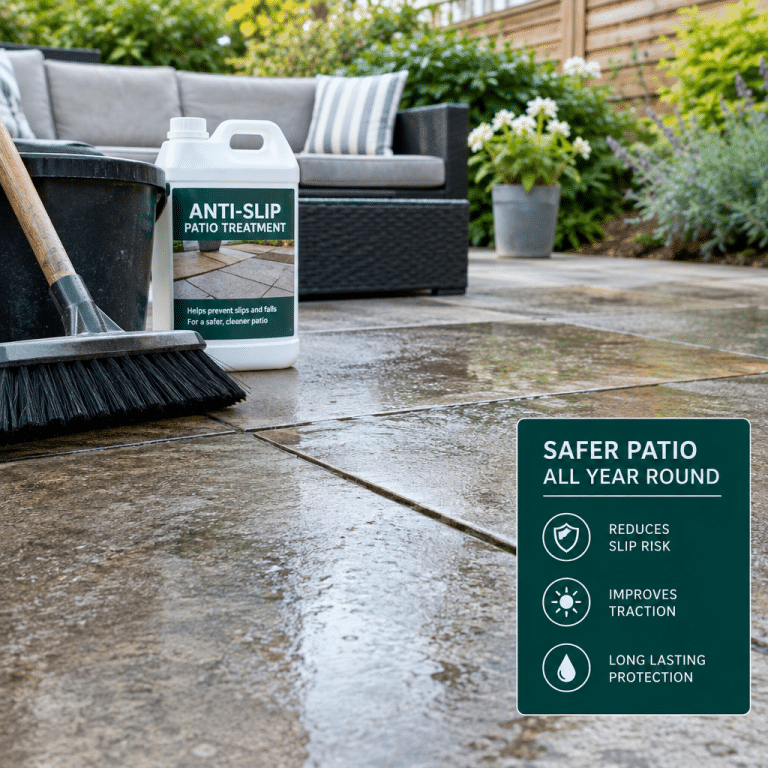
How to Stop Patio Slabs Becoming Slippery
Slippery patio slabs are a common problem in Ireland, where frequent rain and damp conditions can leave outdoor surfaces wet for long periods. Algae, moss and grime may then build up, making a patio hazardous underfoot. Safe slippery patio cleaning starts with identifying the surface and the growth causing the problem, then choosing a suitable cleaning method rather than automatically using the highest pressure setting.
Regular care can reduce the risk, but no treatment makes a patio permanently slip-proof. Drainage, shade, the type of paving and ongoing weather all affect how quickly growth returns.
Why do patio slabs become slippery?
Water alone can make smooth paving feel slick, but a slippery surface often has a thin layer of biological growth or dirt as well. Algae can form a green film, while moss tends to grow in thicker patches where moisture lingers. Lichen and ingrained grime can also affect the appearance and feel of paving.
These conditions are more likely where a patio stays shaded, sits beneath trees, or has poor drainage. Fallen leaves and other garden debris hold moisture against the slabs. In Athlone and across the Midlands, repeated wet spells can give surfaces little chance to dry fully, especially in enclosed gardens or north-facing areas.
How can you clean slippery patio slabs safely?
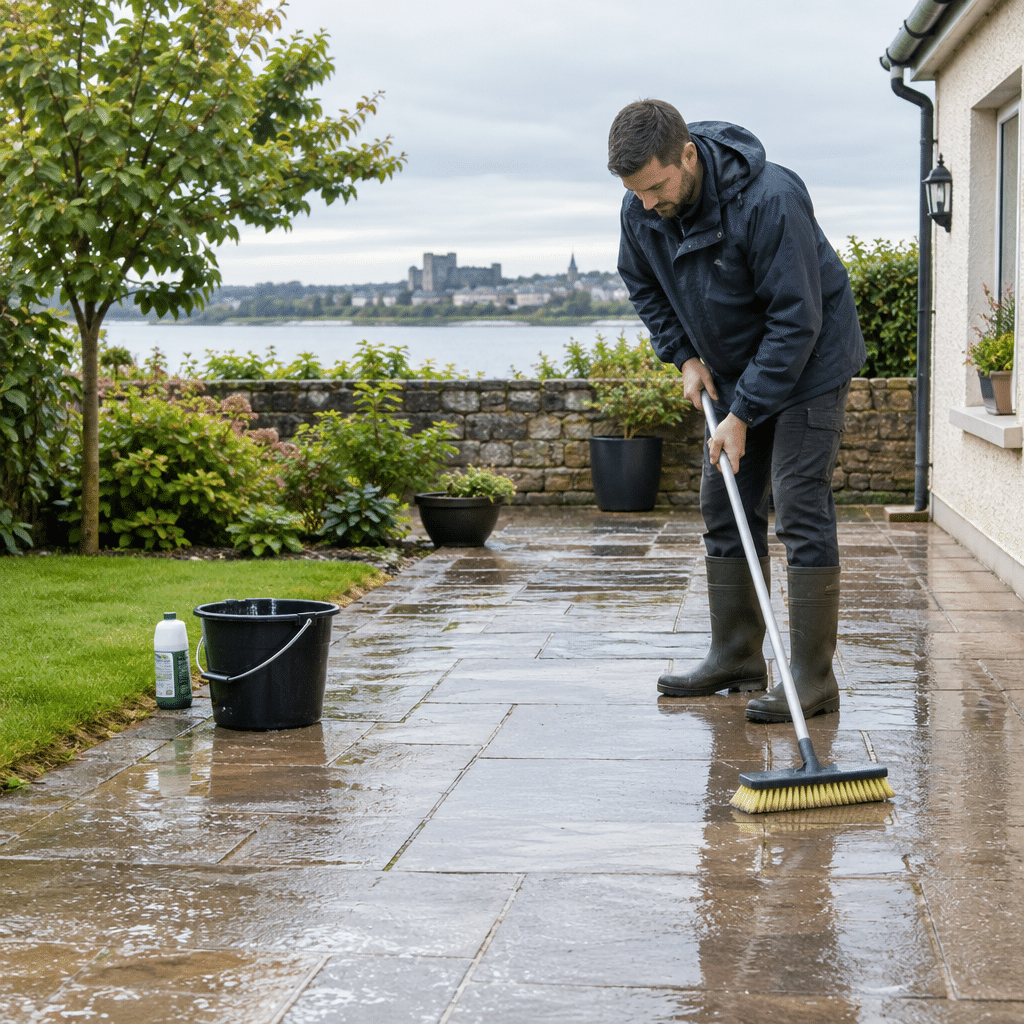
Start by removing loose leaves and dirt with a stiff outdoor brush. This simple step helps uncover the affected areas and keeps organic debris from holding moisture on the paving. Avoid trying to scrub every slab aggressively, as the right approach depends on its material and condition.
For some sound concrete slabs, careful washing with appropriate pressure may remove surface dirt and growth. However, pressure that is too high, or a nozzle held too close, can roughen the surface, damage edges and force water into joints. A roughened surface may then collect dirt more readily. Older, cracked or loose slabs need particular care.
Match the method to the paving
Concrete, block paving, natural stone and porcelain paving do not all respond in the same way. Some natural stones can be marked or eroded by aggressive washing, and strong pressure can displace jointing material between blocks or slabs. Porcelain is often less porous than concrete, but its finish and joints still need to be considered.
When the surface is delicate, the growth is stubborn, or you are unsure what the slabs are made from, avoid experimenting with a pressure washer. A lower-pressure method, suitable cleaning equipment or specialist treatment may be more appropriate. A professional can assess the surface and select a method that balances cleaning with the risk of damage.
Should you use chemicals on a slippery patio?
Do not mix cleaning products or apply a strong chemical simply because it promises fast results. Products can affect paving, nearby plants, pets and drainage, and may require specific handling and rinsing. Always follow the product label, check that it is intended for the particular surface, and take care to prevent run-off from reaching planting beds or watercourses.
Household bleach is not a universal patio cleaner. It can discolour some materials, harm vegetation and create a hazard if mixed with other products. If algae or moss remains after brushing, choose a product specifically labelled for the paving type or ask a cleaning professional to advise on a suitable treatment.
How to reduce slippery growth returning
Cleaning removes existing growth, but it does not change the conditions that encouraged it. A few practical habits can help the patio dry more quickly and make future maintenance easier:
- Brush away leaves and garden debris before they sit on the paving for long periods.
- Keep nearby plants trimmed where they block sunlight or restrict airflow.
- Check whether water drains away from the patio rather than pooling on it.
- Clear moss and weeds from joints before they become established.
- Inspect shaded steps and frequently used paths, which can become hazardous before the rest of the patio.
Do not alter the fall of a patio or install drainage without considering where the water will go. Persistent pooling may point to a drainage or paving issue that cleaning alone will not fix. Loose, rocking or cracked slabs also require repair, not just washing.
Common mistakes that can make the problem worse
Using maximum pressure on every surface
High pressure can remove dirt quickly, but it is not automatically the safest or most effective choice. It may damage softer stone, strip jointing sand or leave visible marks. Test methods should be selected for the paving, not just for speed.
Cleaning only when the patio looks very green
A thin film can be difficult to spot, especially on darker slabs or in wet weather. Waiting until growth is thick can make cleaning more difficult. Periodic visual checks and light maintenance are more practical than leaving a patio unattended until it becomes slippery.
Expecting one clean to prevent future growth
Patio cleaning can improve the surface, but Irish weather, shade and drainage continue to influence regrowth. The result and how long it lasts vary with the material, its condition and the surrounding environment. Treat cleaning as part of ongoing property maintenance rather than a permanent fix.
When is professional patio cleaning worth considering in Athlone?
Consider professional help if the patio has widespread algae, stubborn moss, delicate natural stone, uneven slabs or joints that are already deteriorating. It can also be sensible when a large paved area needs attention or when you are unsure how to clean it without causing damage.
MF Power Washing provides patio and paving cleaning in Athlone and the surrounding Midlands service area. The appropriate method depends on the surface and its condition, so a professional assessment can help determine whether pressure washing, a gentler approach or further repair advice is needed.
A safer, better-maintained patio
To help stop patio slabs becoming slippery, remove debris, address algae and moss with a surface-appropriate method, and look for the reasons the paving stays damp. Pay attention to shade, drainage and damaged joints, as these can all contribute to recurring problems. If the surface is fragile or the growth is difficult to shift, avoid risky DIY treatments.
If your patio in Athlone or the surrounding area has become slippery, contact MF Power Washing for advice or a quotation. The team can discuss suitable patio cleaning options for the type and condition of your paving.